I would like to state first that I am not religious. And for the second time, that Buddhism is not a religion, at least not for me. Buddhism is nothing but a Path, the Path of my spiritual development, I am only a student on it, a tiny speck of dust, I try to learn as much as possible, to get to know the World, myself and balance myself with the World and not least with myself.
In the Suthra-Mantra-Tantra relationship, in the levels of Understanding-Meditation-Action, I am still at the basics of Buddha's teachings, that is, I need to know and understand the sutras, then the higher-level teachings of Padmasambhava, or Guru Rinpoche, and the world of Mantras-Meditation, so that I can finally reach the Vajrayana Tantric /Action to approach... this is a long road, but we can already outline to some extent what we are going to do this is the path I started on years ago. Frankly, this life of mine won't be enough for that, but I'll continue in the next one...
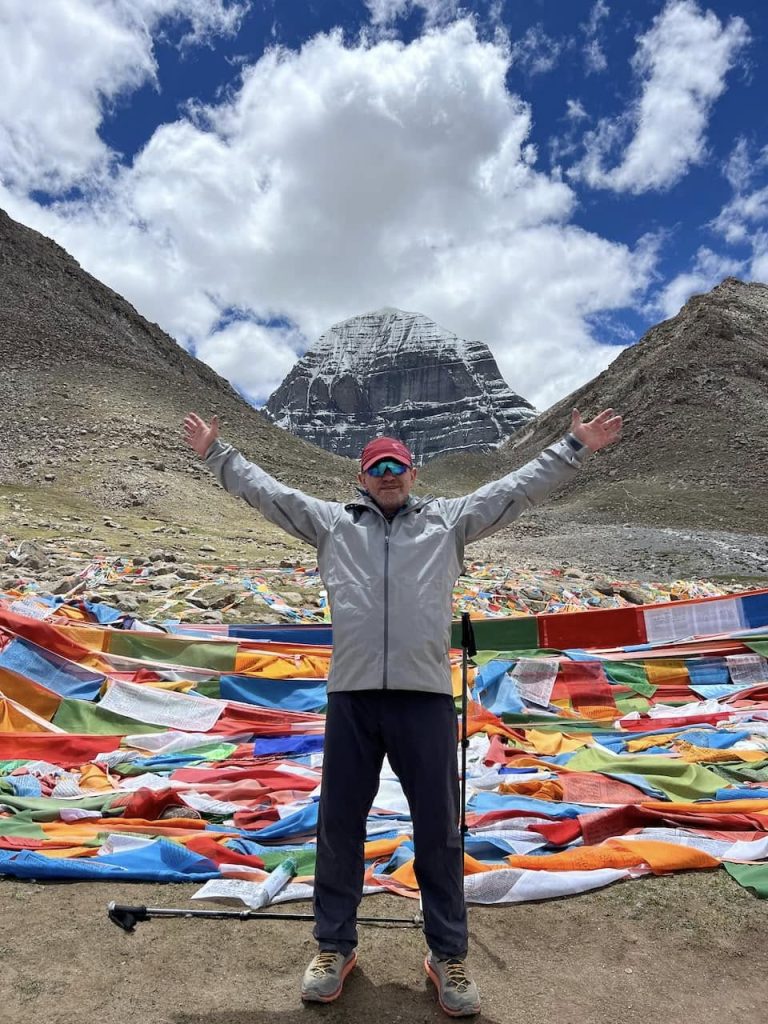
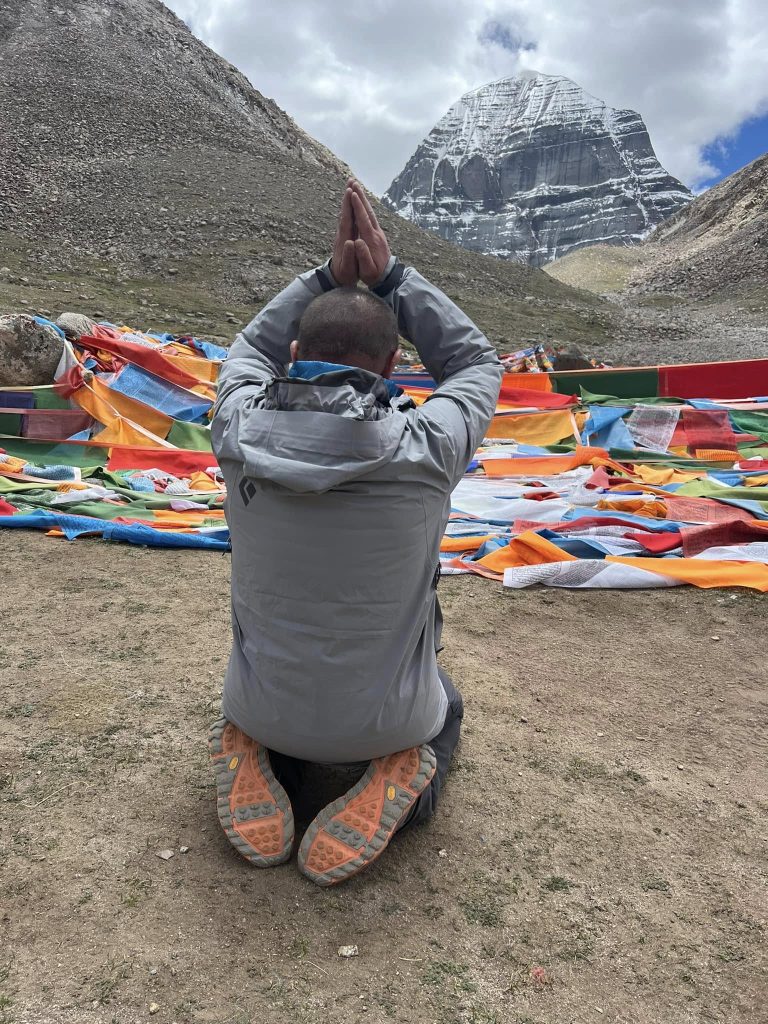
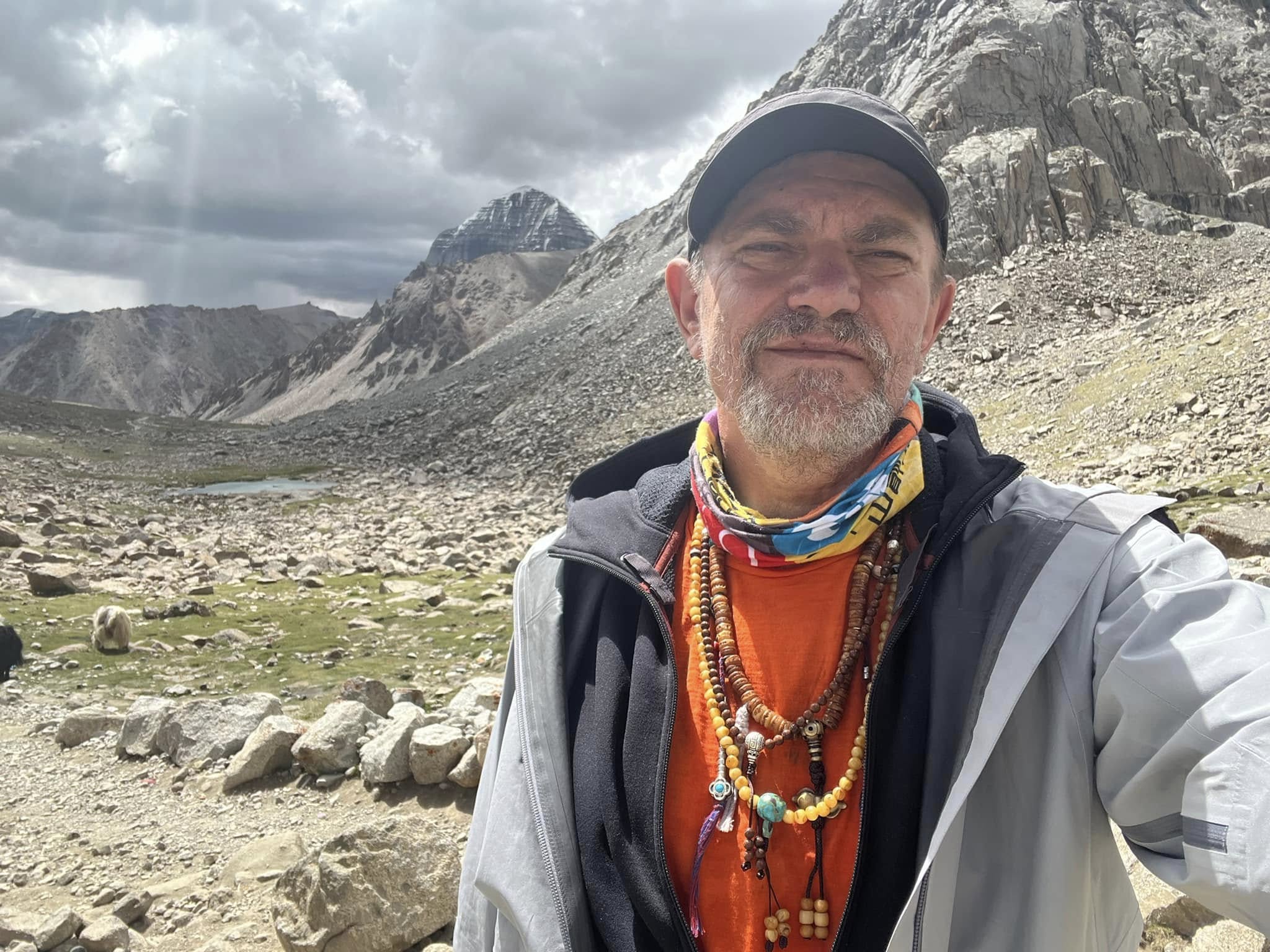
In July 2024 I did 7 circle around Mount Kailash. Tibetans say that the inner circle can be done after completed 13 outer circles (circle around Kailash calls "kora"). So in 2o25 I will go for 6 more outer kora and try to do 13 inner kora to the best of my ability. Currently, I wear 7 silver rings on my mala, which represent the 7 outer kora of Kailash, in May I hope to add another 6 silver rings as 6 more outer kora and 13 gold rings as the inner koras... Since my hyperactivity and energies exceed the level of normal people, as great teachers say, it is difficult to influence me and I myself have to suffer to reach humility... I am ready suffer a lot to be able to be humble. After all, suffering doesn't bother me, especially not when hiking in the mountains, I love nothing more than "suffering" in the mountains...
I assume that 13 external and 13 internal koras in Tibet will break the remaining evil in me and I can reach the appropriate humility. At an altitude of 4.700-5.700 meters above sea level, 13 outer koras are 57 km each and 13 inner koras are 30 km each. Rinpoche said that if I have done at least 3 inner koras, then I will be ready to change... 13 outer and 13 inner circles can be a healing suffering...
7 kora around Kailash, however, in addition to the 14 kg weight loss, gave me a lot in my mental development, but I myself feel that it is not enough. So I'll continue...
2024. In November, I had the opportunity to visit the 8 holiest places in Buddhism, which are connected to the life of the Buddha. We started in Kathmandu with Jigthub Rinpoche, who is Bhutan's greatest lama. Rinpoche and I lit 100 oil lamps at Boudhanath in Kathmandu and prayed for all sentient souls. The light of the candles also shows the way to those departed souls who are stuck in an intermediate world and find their way.
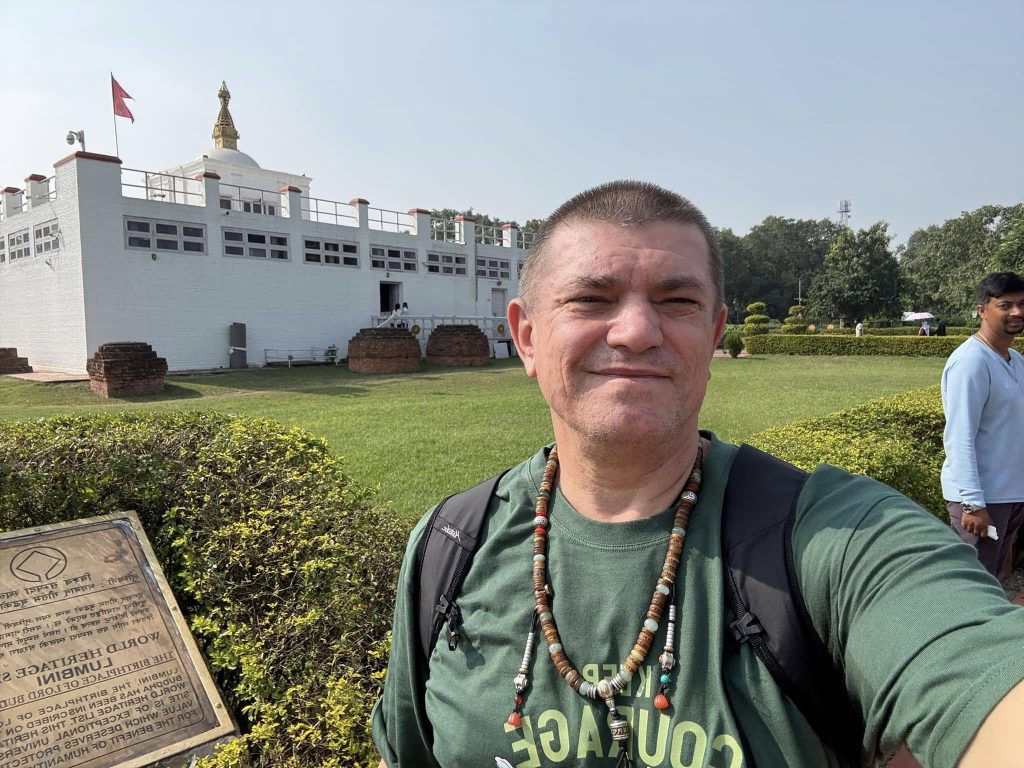
Our first stop was Lumbini, where Buddha was born. Our driver was waiting for us at Lumbini airport, with whom we drove about 2.400 km in Northern India, starting from Lumbini in Nepal and returning there.
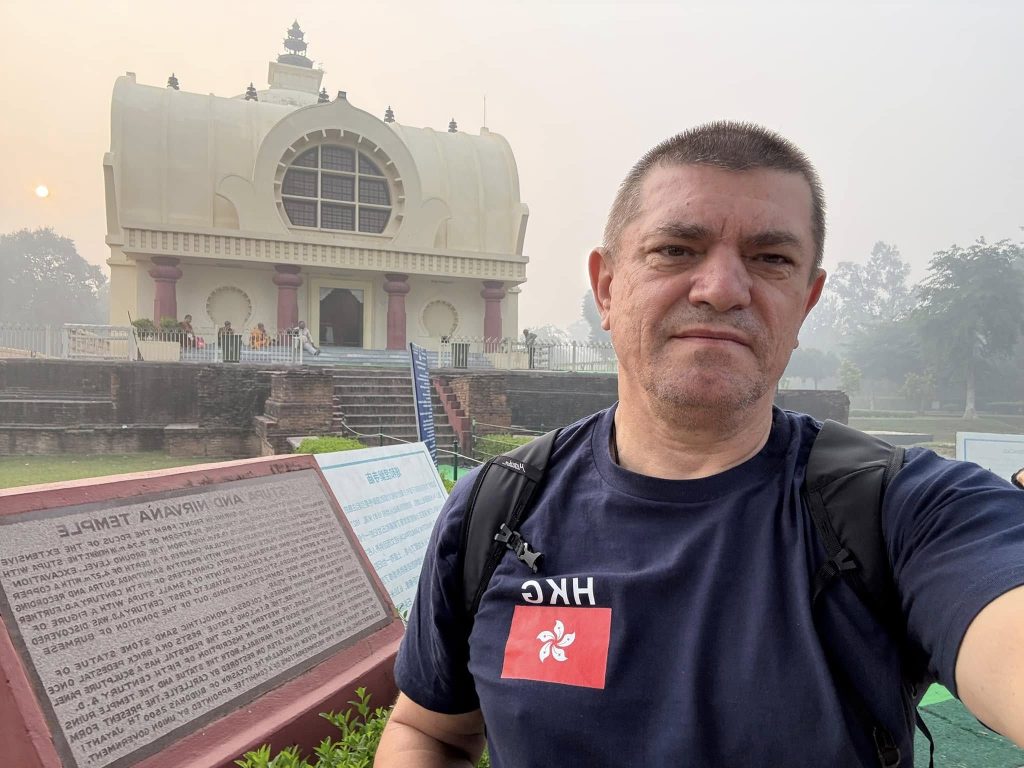
Our second stop was Kushinagar, where Buddha's soul left his body. Looking at the place from a distance, there is a small hill where Buddha's body was laid, where his soul departed, and next to it is the place of the pyre where his body was burned. Now a memorial pavilion with the reclining Buddha stands where the Buddha's soul departed and next to it is a cylindrical building where the bonfire was. In Kushinagar, it is worth visiting the park in the morning when there are no people, I placed my mala on the reclining Buddha statue to absorb energy, then I sat in the park and watched the slowly evaporating Indian mystical morning fog.
We moved from one place to another not according to Buddha's life but according to the logistics of the map, so the nearest to Lumbini was Kushinagar, then Vaishali and so on...
Vaishali was the next place where the Buddha gave his last teaching and reached the state of Nirvana here. Rinpoche said that according to the scriptures, Vaishali is the place where the Buddha clearly formulated the essence of the Suthra-Mantra-Tantra and separated these concepts.
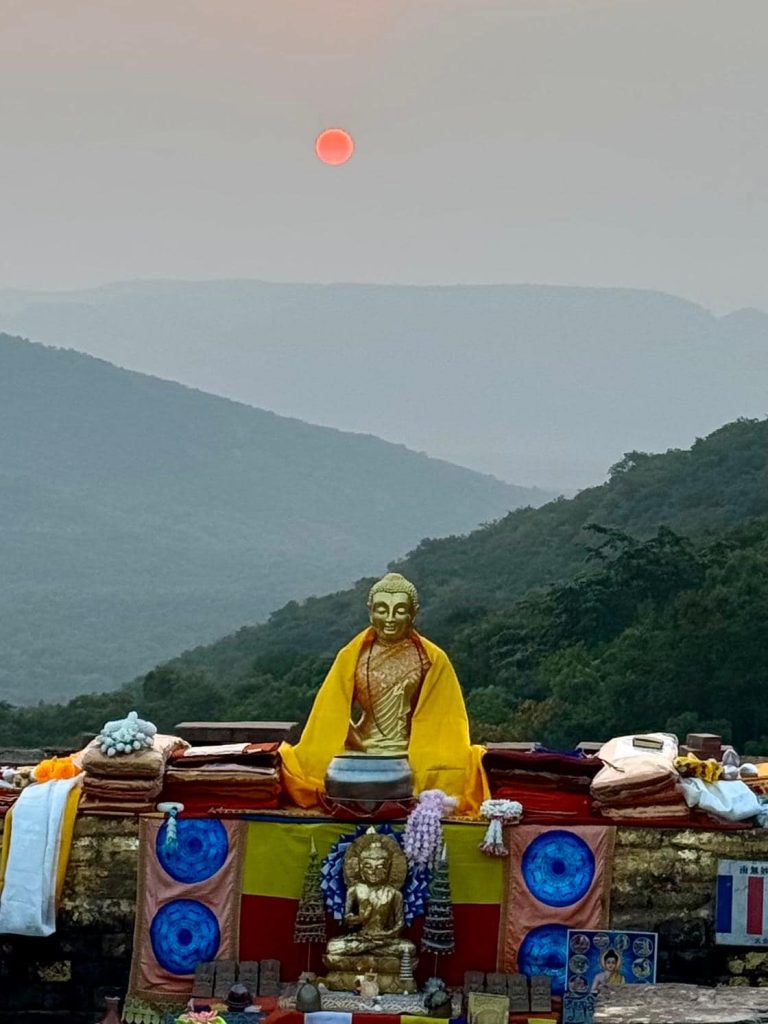
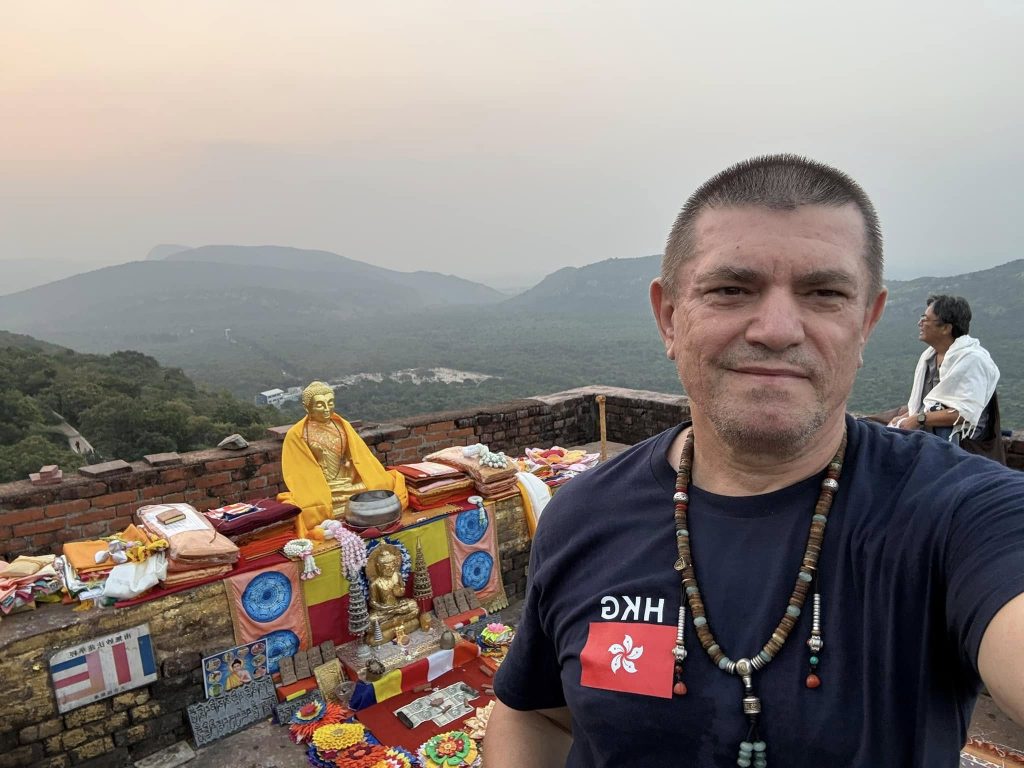
Rajgir was our next stop, where we walked up to the Vulture peak, the cable car was already closed and with the late arrival we had a fantastic sunset. On the Vulture Peak, 16 years after Buddha's enlightenment, he taught more than five thousand monks and followers about Transcendent Perfection, or Prajna Paramita. The Mount of Vultures at sunset must have been a wonderful experience here 2,500 years ago like Jesus' Sermon on the Mount in 31 AD in Galilee. Once again, I had a fantastic experience and could breathe, pray and chant where Buddha did the same thing 2.500 years ago.
Bodh Gaya was the next location where the Buddha attained enlightenment under the Bodhi tree in the 35th year of his life. The city of Gaya now has an international airport, huge traffic, lots of foreigners, ... next to it is Bodh Gaya, where there is also a huge traffic, it is very difficult to get around with motorbikes, rickshaws, cyclists, buses, cows pushing from everywhere... everything is on the road .
Bodh Gaya is one of the most special places, although I have to admit that this place captured me the most, there are too many foreigners, too many beggars, too many violent sellers... however, the authorities have closed the park, you can only enter after strict security checks. No electronic devices of any kind are allowed, not even earphones. The phone must be left in storage. So we couldn't even take a photo inside, we could only have a photo taken by an internal photographer. The park of Bodh Gaya is wonderful, next to the temple or Stupa is the Bodhi tree under which Buddha became enlightened. The crowd here is huge and there are also plenty of "pseudo-Buddhists" working for money. I also got tree leaves, although not directly from the tree under which the light came, but from another tree barely 20 meters away... children pick the leaves and sell for money...
It's a great experience to be next to the Stupa and the Bodhi tree, to sit down and experience the "emptiness"... I can't even describe it, if I tried to describe it, it would be something stupid, the wording of this should be left to a Master. However, what I experienced is once again a stepping stone in the long staircase leading upwards in the development of my personality...
As soon as we got out of the sacred garden of the Stupa, we picked up our phones from the safe and were attacked by the vendors. I also bought beautifully laminated Bodhi tree leaves, which they said were from the Buddha's Bodhi tree, but this is clearly impossible, but at least it is from Bodh gaya, which is a fact, so its power may be similar.
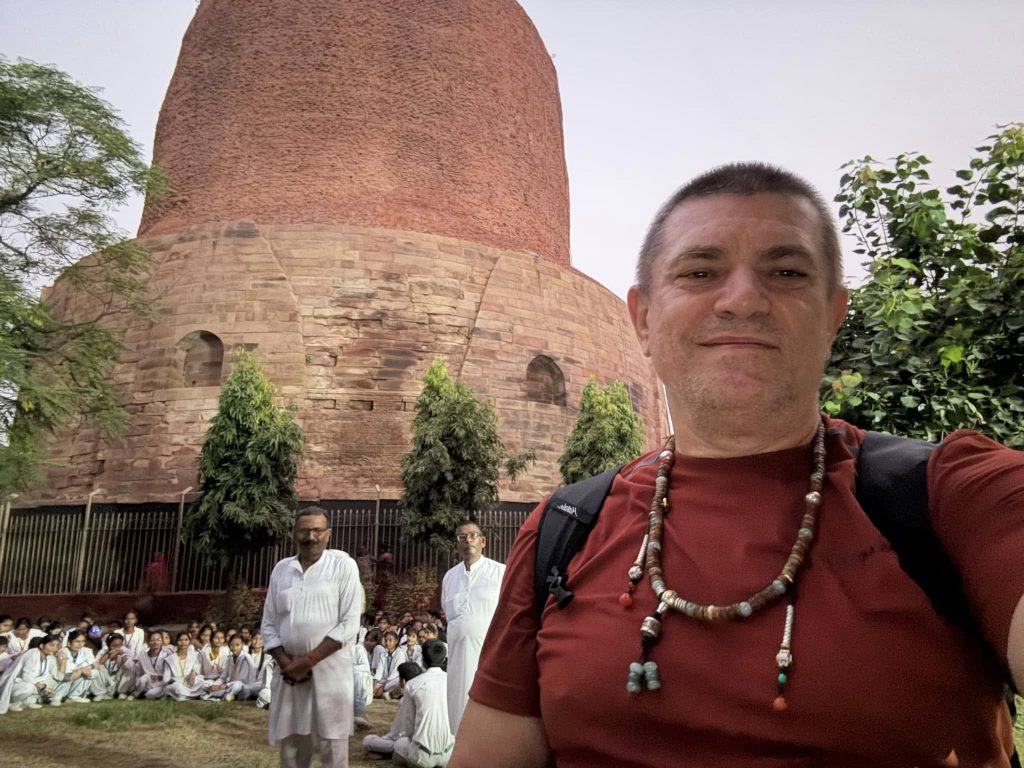
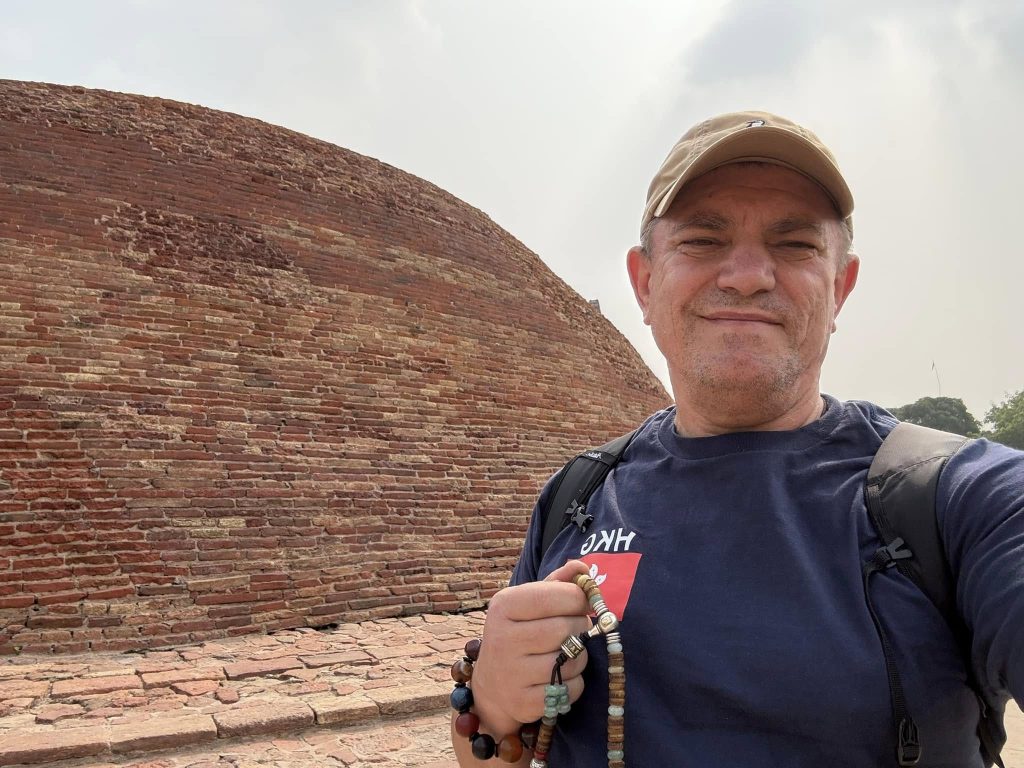
Varanasi was the next location, more specifically Sarnath, a city connected to Varanasi with ancient remains. Due to the chaotic traffic, we arrived late in the afternoon and were unable to enter the park of the ancient stupa of Sarnath. We walked around it and proceed to Varanasi, our hotel was right on the banks of the Ganges River. In the evening, we walked in the whirlwind beyond all imagination and on the banks of the Ganges. The water is like black coffee, garbage and filth everywhere... I've been to India a lot and I must say I'm used to it. I like it the way it is. Next day we started very early in the morning and reached the Sarnath park before 7 am. Sarnath was the place where the Buddha gave his first teaching after his enlightenment and this is the place where he first spoke about the Four Noble Truths. Sarnath is one of the 4 holiest Buddhist sites in the world. Once again, it's an uplifting experience to walk in the park around the old stupa, sit down, empty yourself and just be... It's hard to put into words, just like it can't be at the other locations.
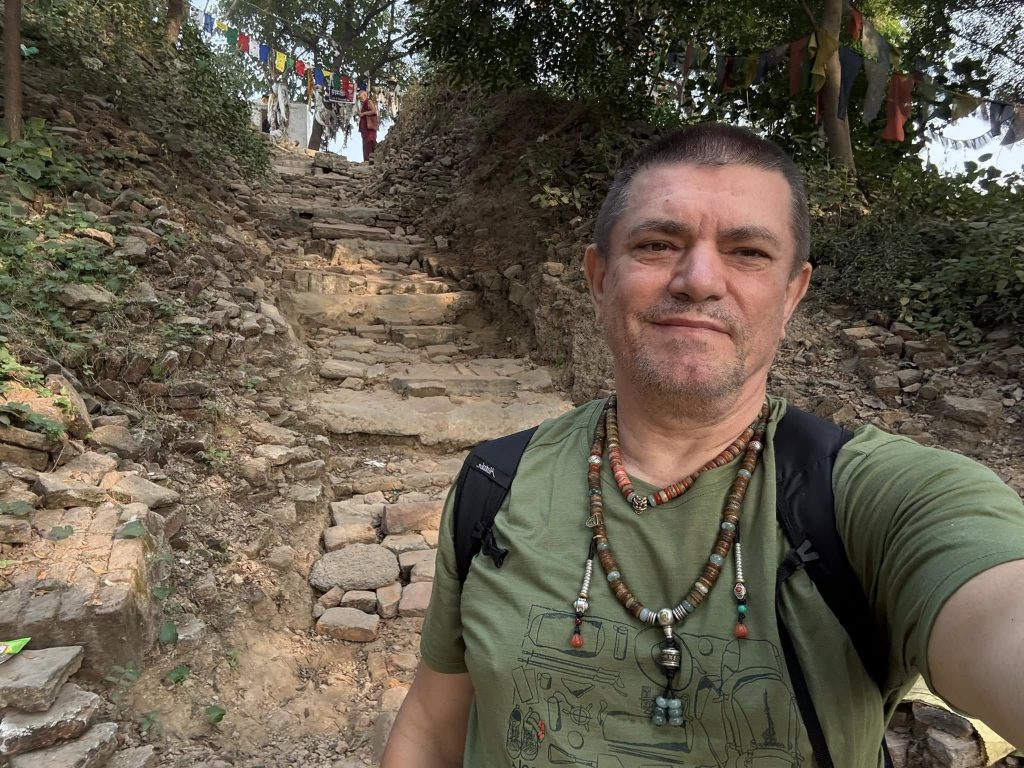
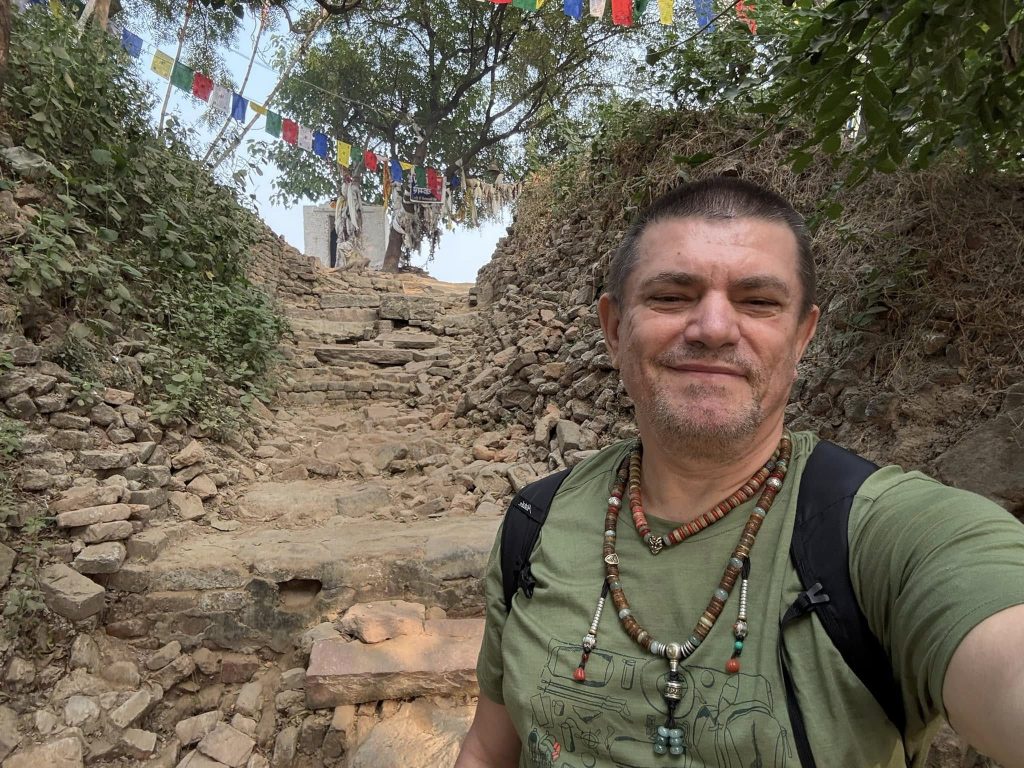
Sankissa was the place where Buddha descended from Heaven accompanied by Indra and Brahma. The "Stairway to Heaven" is located here, in the small park there is a stupa-like hill to which this particular rock staircase leads, on the top of the hill there is a crumbling shrine with the three Deities... in front of which we prayed and lit incense. We walked around the shrine three times, chanted mantras, and then we went down on those steps... in the park there is also the remains of King Ashoka's lion pillar, which indicates that once upon a time the ancient city of Sankissa shone with a much brighter light... now what is there is very poor, unkempt and dilapidated. However, the experience is unforgettable for those who have Buddha in their hearts...
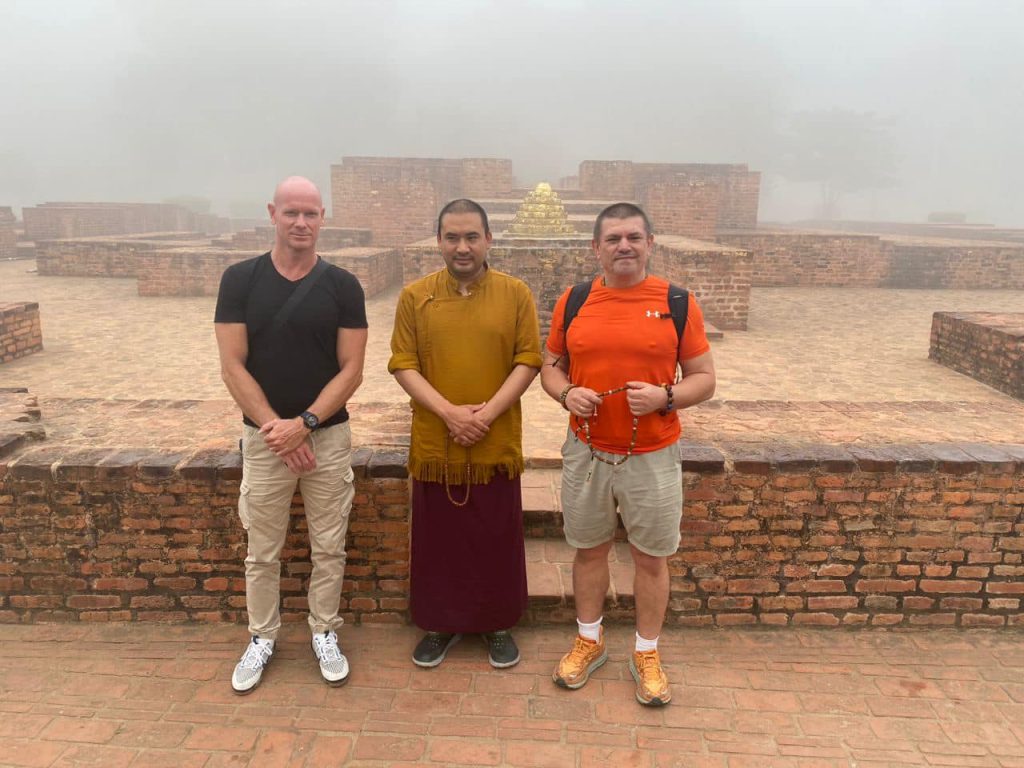
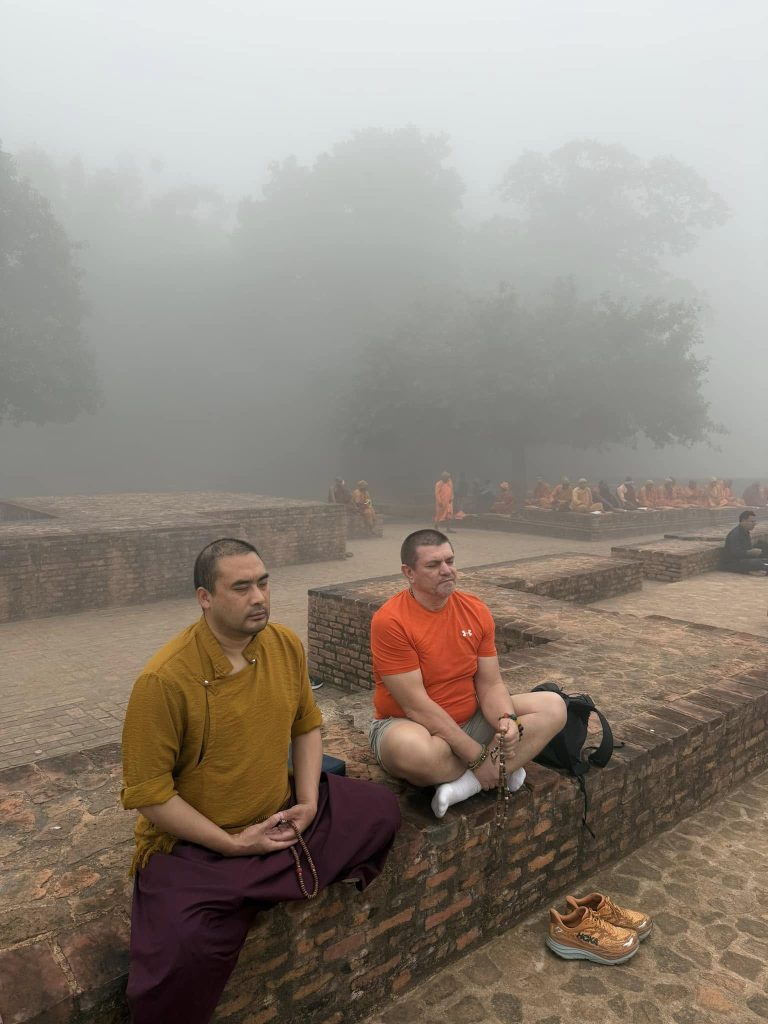
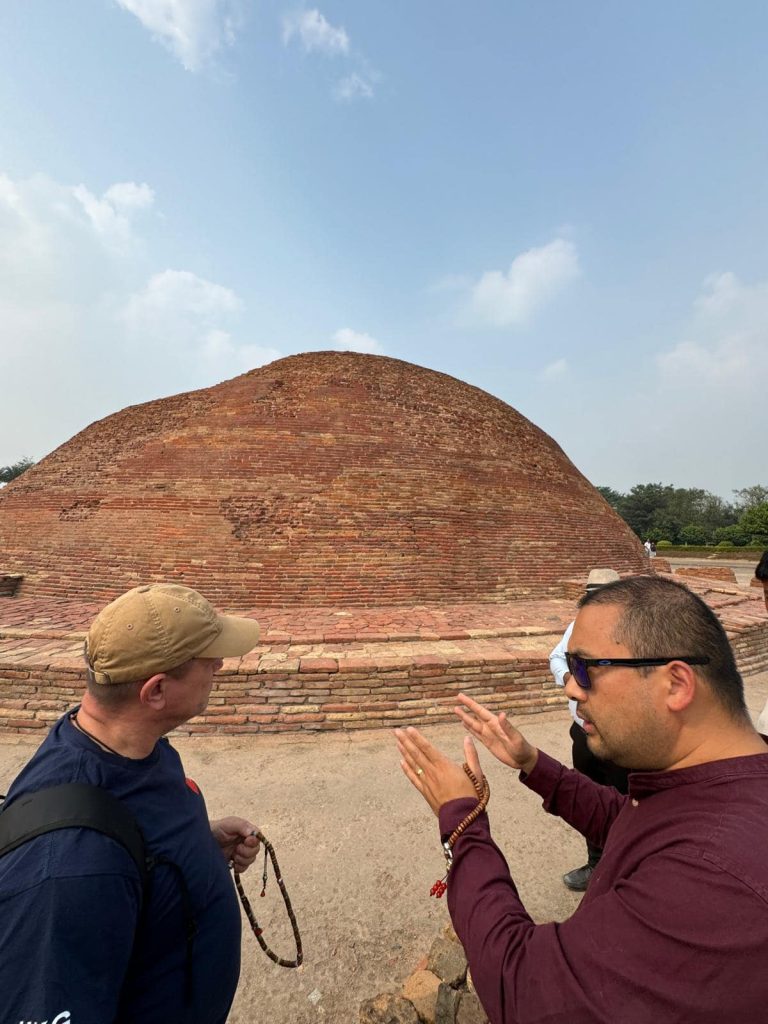
Shravasti was our next stop, which is again a day's drive in Indian traffic. Shravasti is the place where the Buddha did most of his teaching in his life. After his enlightenment, he bought land here, lived here, built churches and other buildings here. We set off for the park early in the morning in dense fog, and already at 7 in the morning many pilgrims preceded us. Buddha lived here, this was his territory, now I could also be there and walk on the land where Buddha spent most of his life.
There is a central place in the park, around which we took seats, meditated, walked around many times and watched the arriving groups. When I heard Chinese, I joined the group and listened to the presentation of the tour guide and the lama of the group. I think I could write a book about my feelings, but I limit myself to the simple statement that the experience is indescribable...it takes time to digest and be able to articulate what I experienced.
Now I'm sitting here in Lumbini in the hotel, yesterday we drove back from Shravasti in India to Nepal again... I won't mention the conditions at the border crossing and on the road... rather, as Rinpoche said, this is nothing more than a test of our patience and calmness... I will leave shortly for the airport and we will fly back to Kathmadu.
What did these 8 locations give me?
A lot... a lot....a lot.
I gather my thoughts on how to describe and articulate what these 8 locations gave me, before the 7 Kailash era...
I could simply say that I have entered a spiritual path on which I am moving, it is like a very long flight of stairs to a high mountain and every experience, every new learning is a step up... but when I look up the flight of stairs... there are still many, many more steps there is and I can't see the top, ... however, I am diligently moving and going up. How much I change outwardly towards the world, not me, but my environment can articulate in relation to me.
I'm just working diligently and trying to be humble and balance myself with the world.