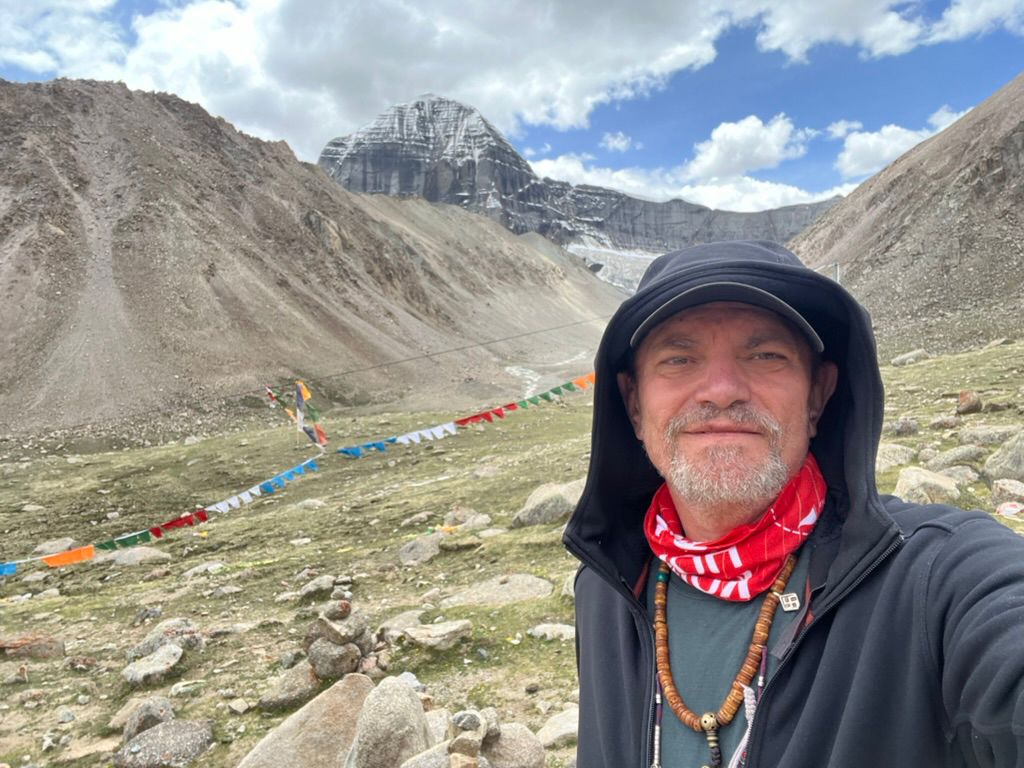
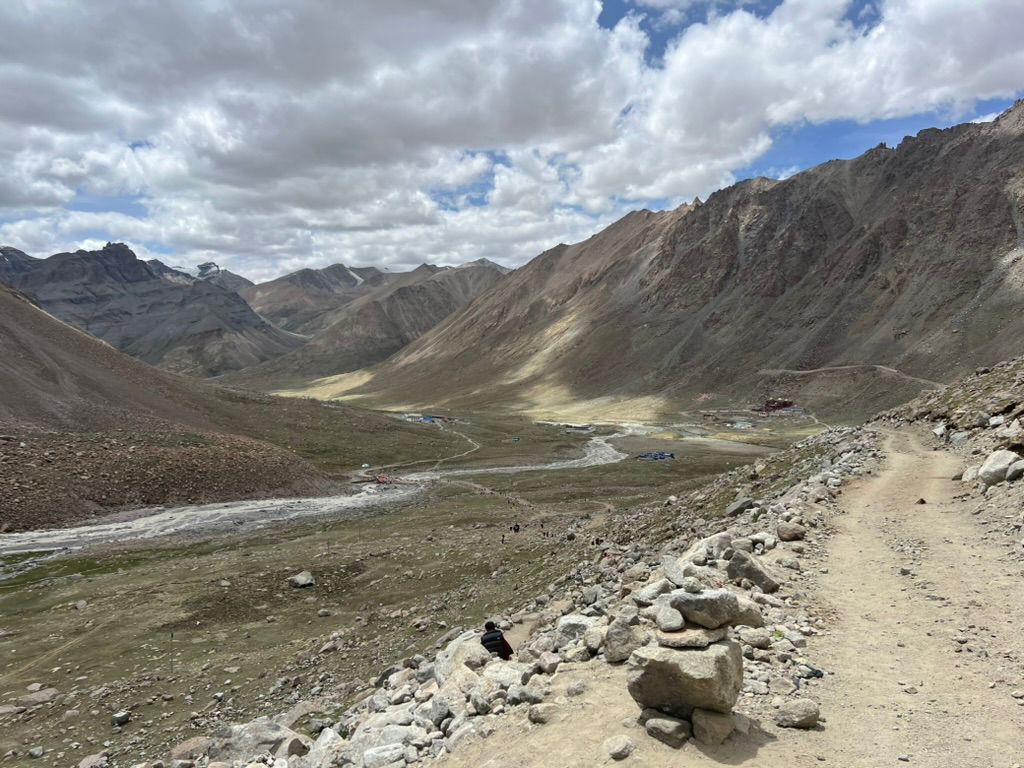
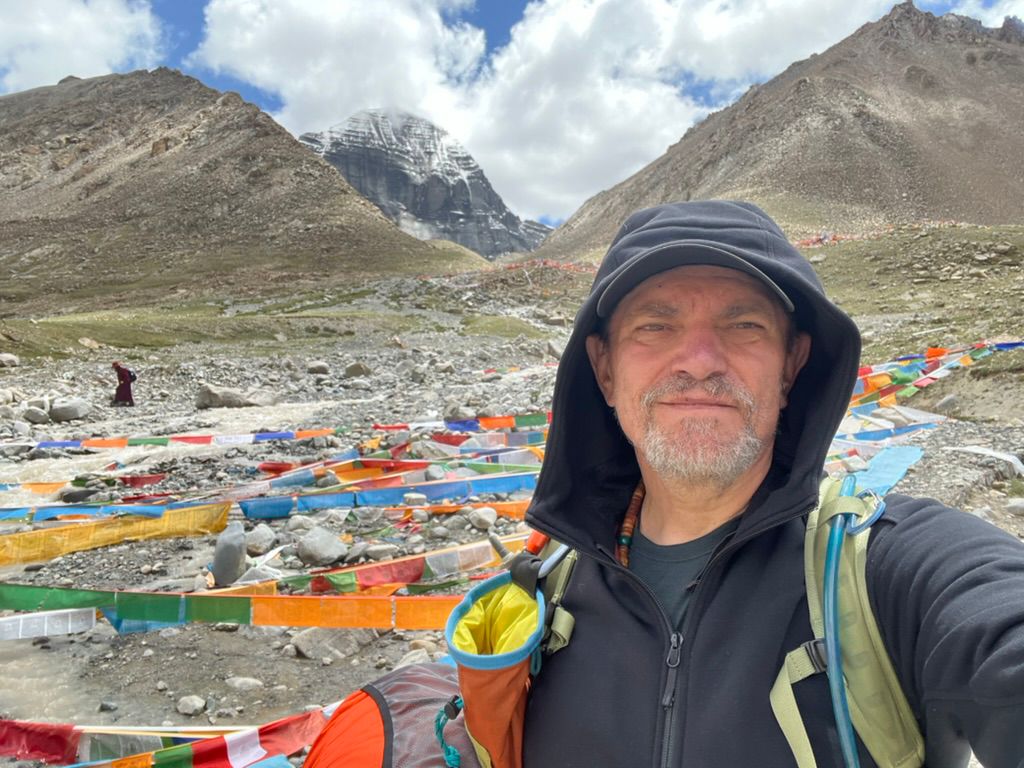
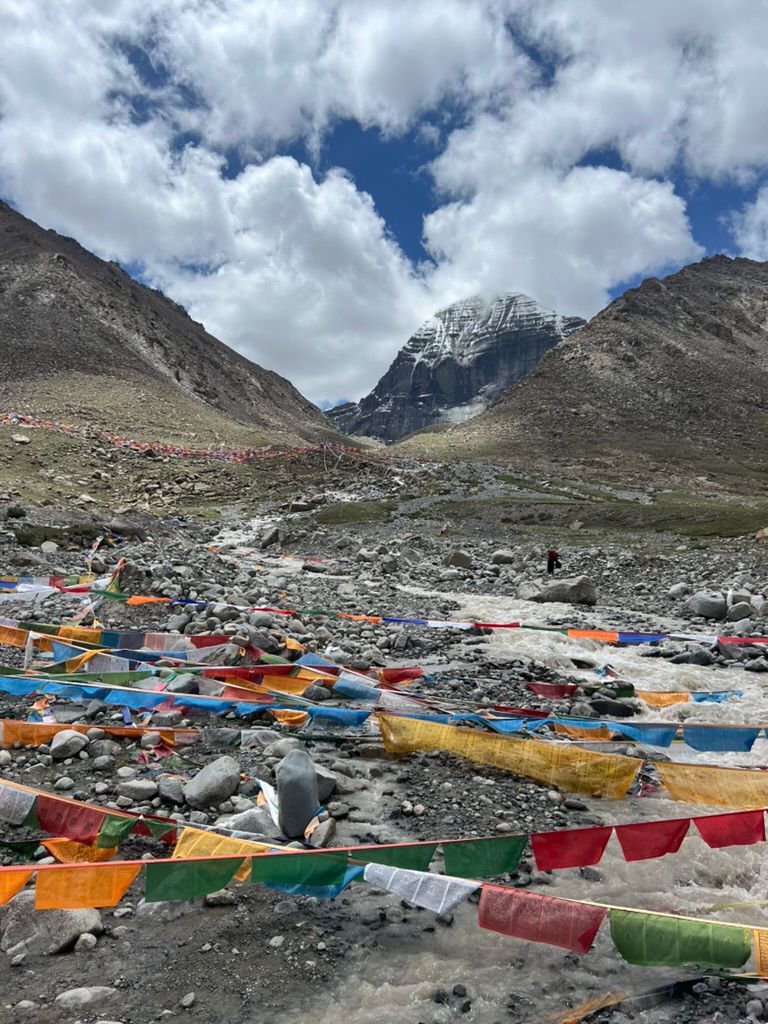
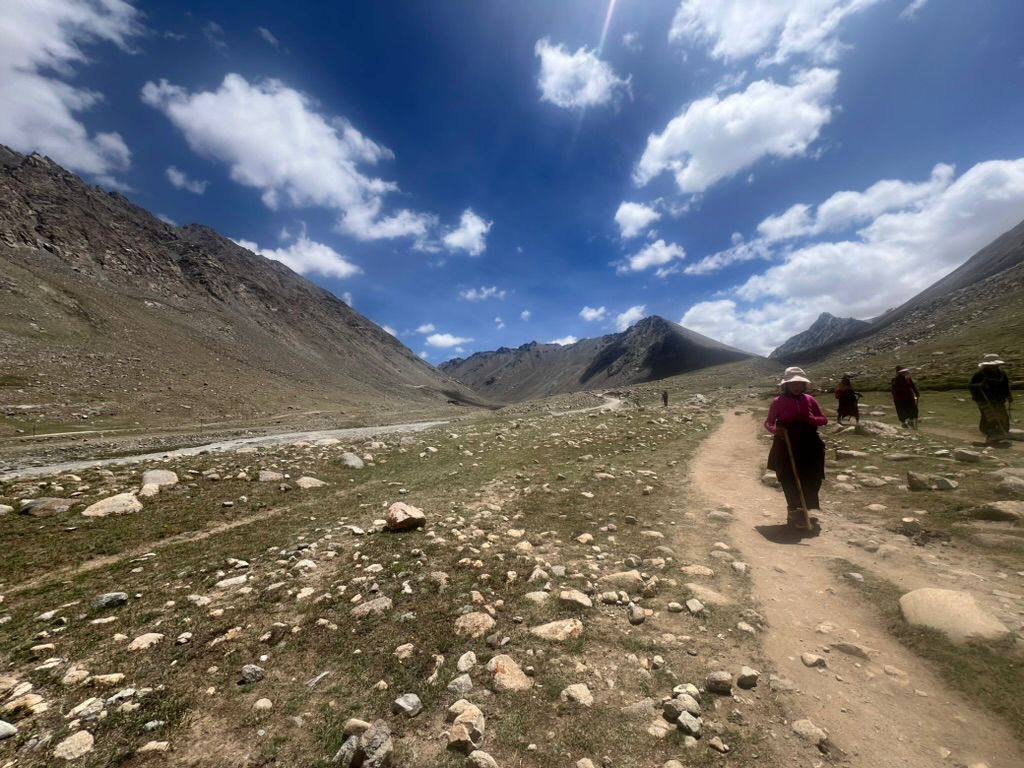
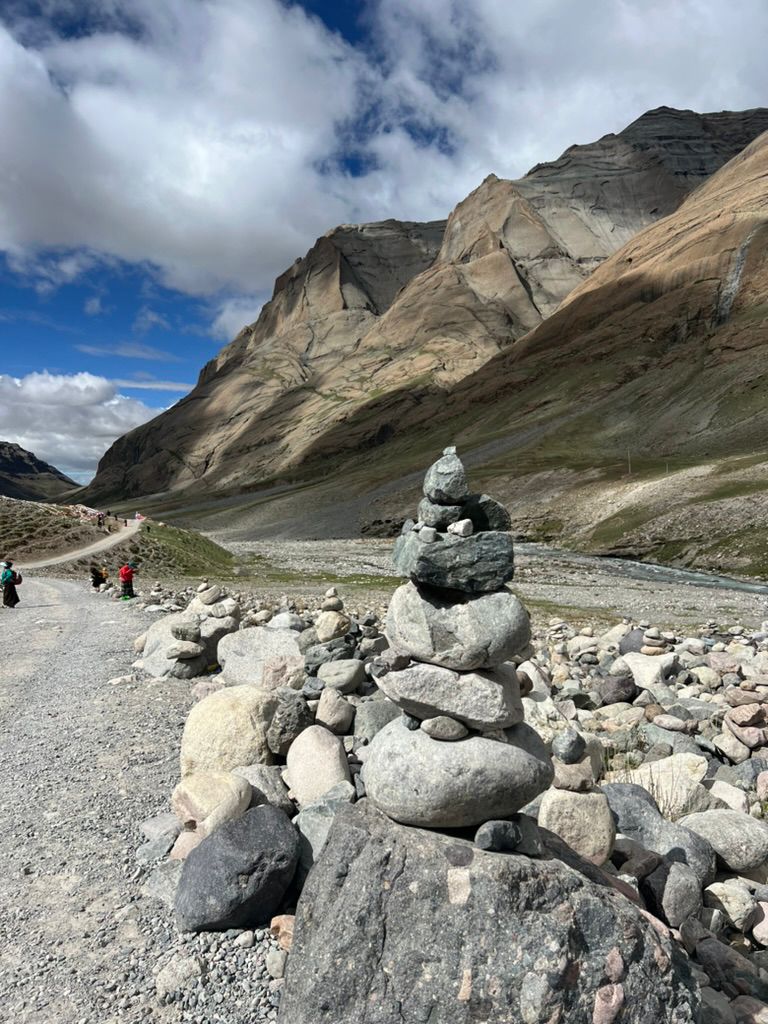
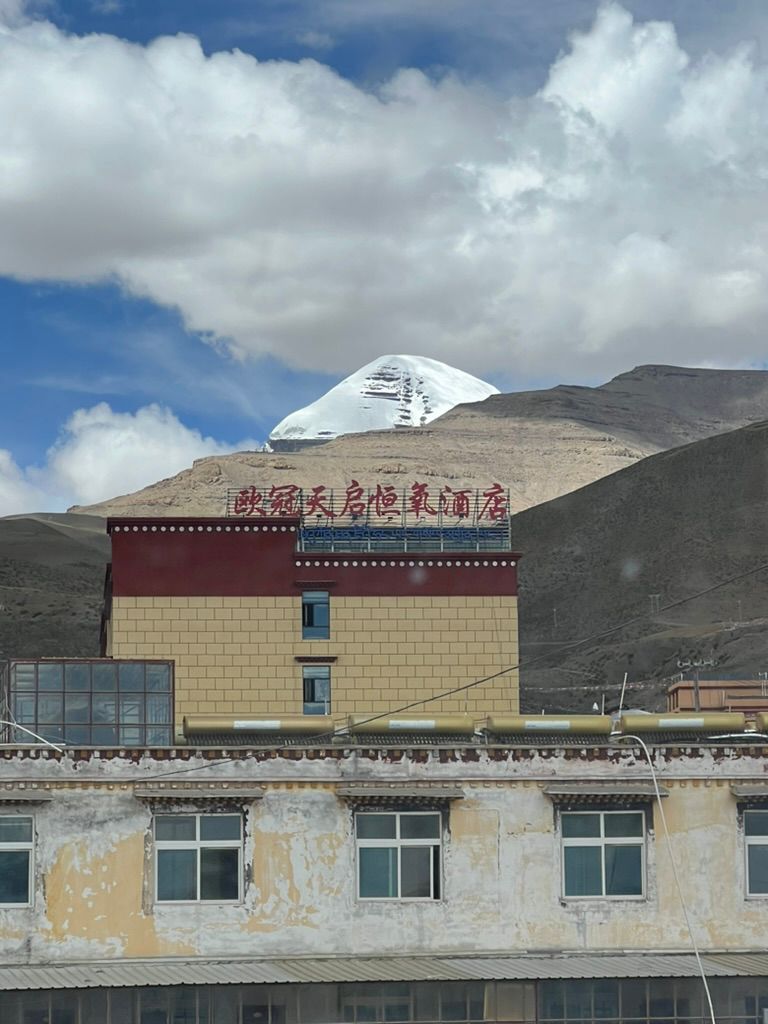
Kailash Kora 5.

I finished the 5th cycle...
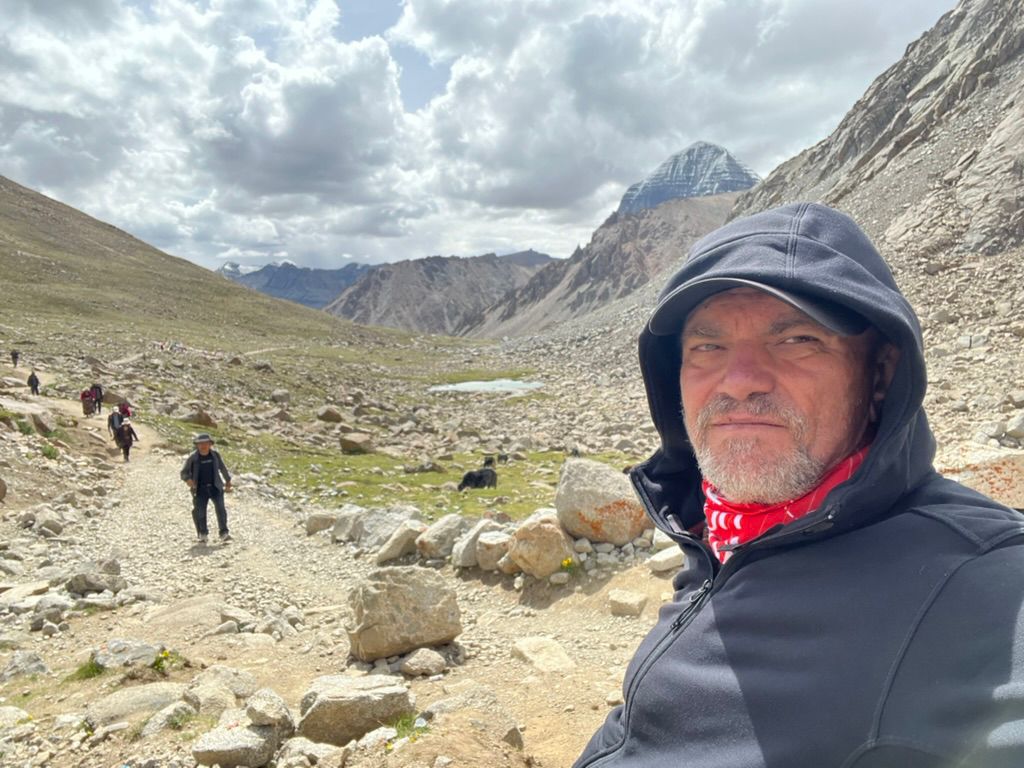
I have now walked 285 km around Kailash.
On this 5th cycle, the demons were clearly with me.

My thoughts were constantly revolving around the burning of the world... literally, the World is not far from it... but here peace could be with me.
I had very specific visions that Germany would be destroyed... I don't know where this came from here in the Himalayas.
Primarily, I want to achieve this here, to leave everything that is bad in me and only my good qualities will remain.

On the first day of the 5th cycle, a lot of pilgrims started their cycle. Many Indian groups with Sherpa guides.
Foreigners go from Darchen to the Derakpu rest area on the first day and sleep there. On the second day, they cross the Dolma La Pass and the DziDüPu rest area, and then back to Darchen on the third day.

I can get from Darchen to the Derakpu rest area in 5-6 hours, where I have breakfast.
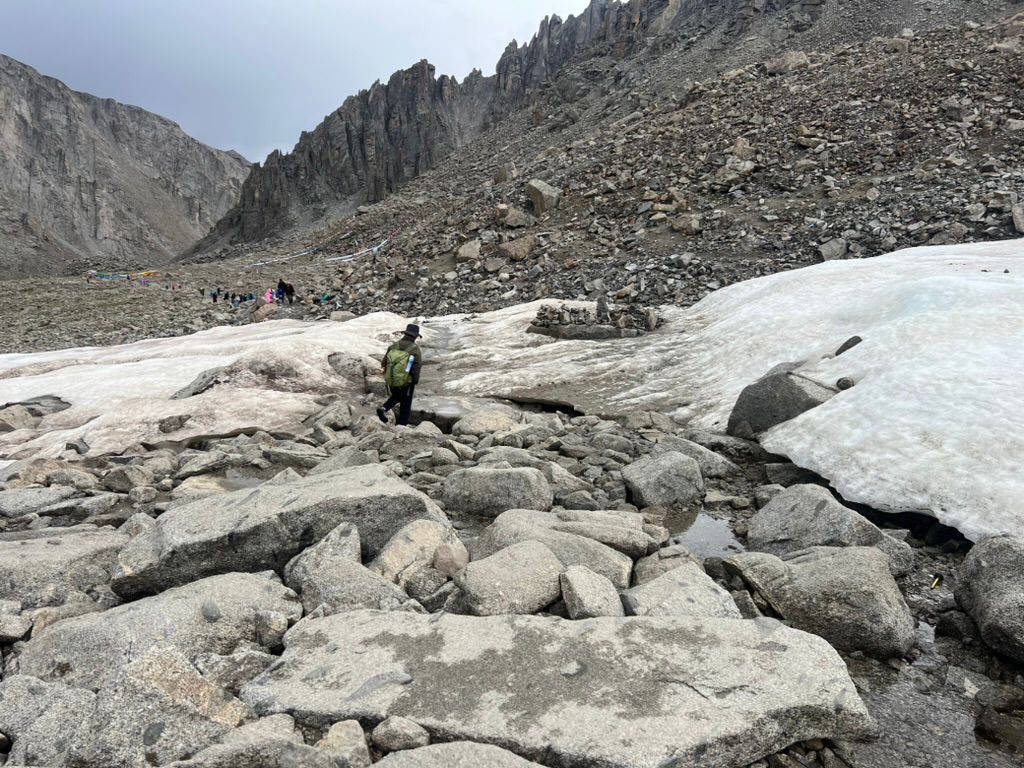
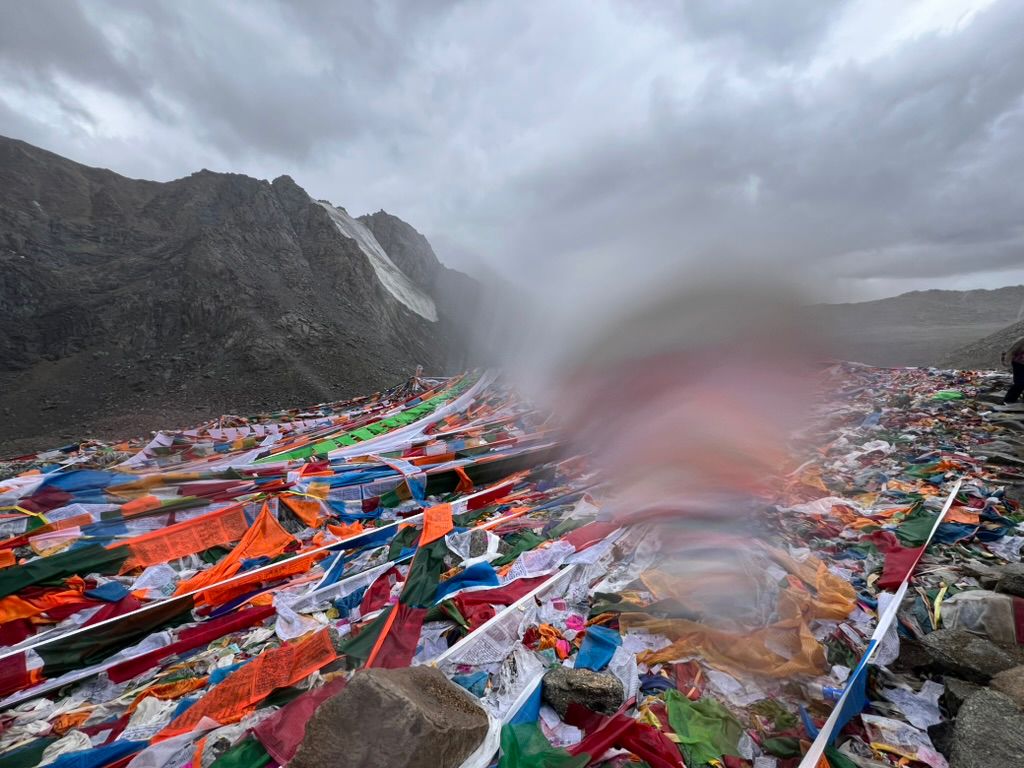
From Derakpu, it's 1 hour up to the Dolma La rest area, from there 2 hours to the top of the Dolma La pass, another 1 hour to go down on the other side to the first rest area, which the Tibetans call Seshon.
We usually stay at Derakpu for an hour and leave around 1 am, so by 5 am we are already in the valley on the other side.
From Seshon, it's another 3 hours to reach the DziDüPu temple and rest area.

Yesterday we came over the mountain at a good pace, but to my greatest pain I couldn't buy yogurt from the yak owners who were camping because they had already sold it.
There are a lot of pilgrims now...
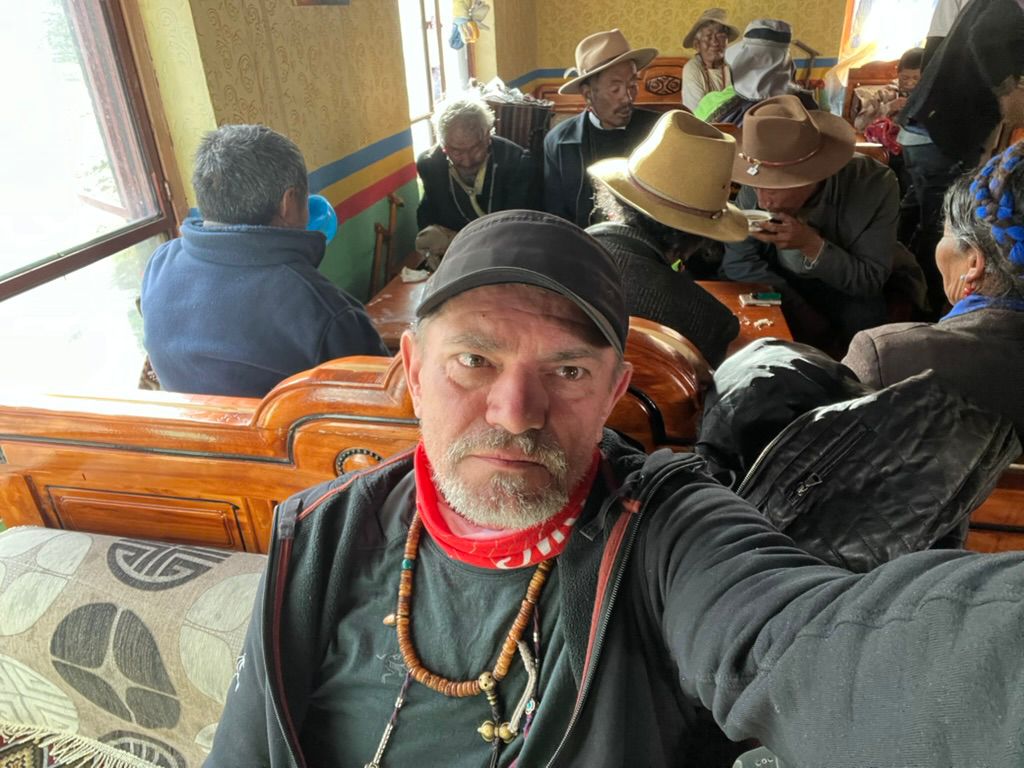
We reached the Temple Inn at 8:30 pm. The sun was still shining here until 1:30 pm.
I ordered vegetable noodle soup for dinner, we chatted with the mountain guide and his brother, then I fell asleep before 1:00 pm.
The temple is at an altitude of 4.850 m, despite this I slept for 11 hours...

We didn't leave early in the morning, but we still got back to the hotel in Darchen by noon.

Unfortunately, Kalsang has a cold and his strength is going away.
We took a lot of vitamins and medicine in Darchen.
Let's hope he gets better because tomorrow we would be going to the 6th...

Marriage in Tibet...
I read somewhere before that in Tibet a wife can have more than one husband... I thought I would ask because it seems so unthinkable.
Who else but Kalsan did I ask, my mountain guide?

Kalsan was not surprised by the question, he answered seriously and realistically.
He says this is necessary if the family is well-off and there are two brothers.
In such cases, they do not marry each other individually, but the two brothers marry a woman together... that way the wealth is not divided...

Well, ... but then how do they sleep...?
Kalsan says it's simple, one day with one, the next day with the other...
There's nothing wrong with that, because they are brothers, they were born to the same mother...

And the children?
Well, a family is a family. A mother gives birth to them all.

There are things like this that we have to sit down and digest with a European or Chinese mind, thinking about how it is...
Actually, there is logic, for those who live by it, it doesn't mean anything special.

Supposedly, it also happens the other way around when two sisters marry one man...

further pilgrimages

Big Buddha, Hong Kong

Big Buddha, Hong Kong

The Big Buddha, also known as Tian Tan Buddha, is famed as the most iconic attraction of Lantau. Sitting next to the Po Lin Monastery, it is only a 10-minute walk away from Ngong Ping Village. The majestic outdoor bronze Buddha statue sits solemnly atop the peak of Mount Muk Yue...

read more
Fukakusa, Kyoto, Japan

Fukakusa area, Kyoto, Japan

Fukakusa area in Kyoto has ties to Buddhism. Specifically, Kosho-ji Temple, a Soto Zen Buddhist temple, was founded in Fukakusa during the Kamakura Period. It was later reconstructed in 1648. Additionally, Fushimi Inari Taisha, a prominent Shinto shrine, is located in the Fushimi area, ...

read more
Enryakuji Temple (Hieizan), Kyoto, Japan

Enryakuji Temple (Hieizan), Kyoto, Japan

Located in Kyoto's eastern mountain range on Mount Hieizan (比叡山), Enryakuji (延暦寺) is one of the most important monasteries in Japanese history and the headquarters of the Tendai sect of Japanese Buddhism. Many influential monks studied at Enryakuji, ...

read more
Todaiji Temple, Nara, Japan

Todaiji Temple, Nara, Japan

Todaiji (東大寺, Tōdaiji, "Great Eastern Temple") is one of Japan's most famous and historically significant temples and a landmark of Nara. The temple was constructed in 752 as the head temple of all provincial Buddhist temples of Japan and grew so powerful ...

read more
Tiger’s Nest, Taksang Monastery, Paro, Bhutan

Tiger’s Nest, Taksang Monastery, Paro, Bhutan

Taktsang Monastery, famously known as Tiger’s Nest in Bhutan or Paro Taktsang , is located in Paro district. The monastery is one of the most venerated places of pilgrimage in the Himalayan. Taktsang clings to the rock towering 800m ...

read more
Angkor Wat, Cambodia

Angkor Wat, Cambodia

Angkor Wat, located in Cambodia, is a temple complex and one of the largest religious monuments in the world. Originally built as a Hindu temple dedicated to the god Vishnu in the 12th century, it later transformed into a Buddhist site...

read more
Borobudur

Borobudur

I decided to continue last year's pilgrimage series and now I set out to visit Borobudur on the island of Java in Indonesia. In the summer of 2024, I spent a month in Tibet and did 7 aras, walking 400 km around the most sacred mountain of 4 religions, Kailash, at an altitude of between 4,700 and 5,700 m above sea level...

read more
Boudhanath Stupa, Kathmandu

Boudhanath Stupa, Kathmandu

Boudha Stupa or Jarung Kashor, is a stupa and major spiritual landmark seen as the embodiment of the enlightened mind of all the Buddhas, located in Boudhanath, within the city of Kathmandu, Nepal. Built in the northeast of Kathmandu Valley, the stupa gave birth to the origins of Tibetan Buddhism...

read more
Mit adtak nekem 2024 év zarándoklatai?

What did the pilgrimages of 2024 give me?

I would like to state first that I am not religious. And for the second time, that Buddhism is not a religion, at least not for me. Buddhism is nothing but a Path, the Path of my spiritual development, I am only a student on it, a tiny speck of dust, I try to learn as much as possible, ...

read more
Shravasti

Shravasti

Shravasti is where Buddha spent most of his life after his enlightenment. He became enlightened in Bodh Gaya at the age of 35 and died at about 84 in Kushinagar. There are several old memorial sites in Shravasti that are connected to the life of Buddha, but the park that was once his own property...

read more

How Can You Make a Donation?

H.E JIGTHUB RINPOCHE MAHAYANA BUDDHIST CHURCH

Nyílvántartási szám:
01-09-0000117
Székhely:
3067 Garáb, Petőfi út 41.
Adószám:
19139805-1-12
Technikai adószám (adó 1%):
2563
Unicredit Bank:
10918001-00000106-34620002 HUF
Képviselő:
Juhász György
Vallási vezető:
Őeminenciája Trulku Jigthub Rinpoche
www.mahayanaegyhaz.hu

H.E JIGTHUB RINPOCHE MAHAYANA BUDDHIST CHURCH

© 2025

Contact Us